The cruelest form of inequity is hunger: a denial of the basic needs of people to exist. Hunger means a long and slow death, and the cruelty of hunger in this country is down to some basic socio-economic challenges. Hunger in Gaza, hunger in Ethiopia, Sudan, and Syria (for example) is caused by physical conflict that destroys the means of production. Hunger in the United States is caused not by a system broken by war, but by greed. The United States has the capacity to feed all its residents (citizens and non citizens). To truly address hunger and nutrition security requires innovative collaboration between private, public, and nonprofit sectors to ensure the wrap-around services that support food-insecure families. In Allegheny County, nearly 11% of the residents do not have consistent access to enough food for an active, healthy life. In Wilkinsburg and its environs, this number is higher: closer to 30-40 %. Our families are typically low-income, with young children, single parents, seniors (often with grandchildren), and veterans. These individuals and families struggle to obtain enough food, especially healthy, culturally appropriate food, to meet the daily nutritional needs of the household. Food insecurity is not an emergency for them: it is a way of life.
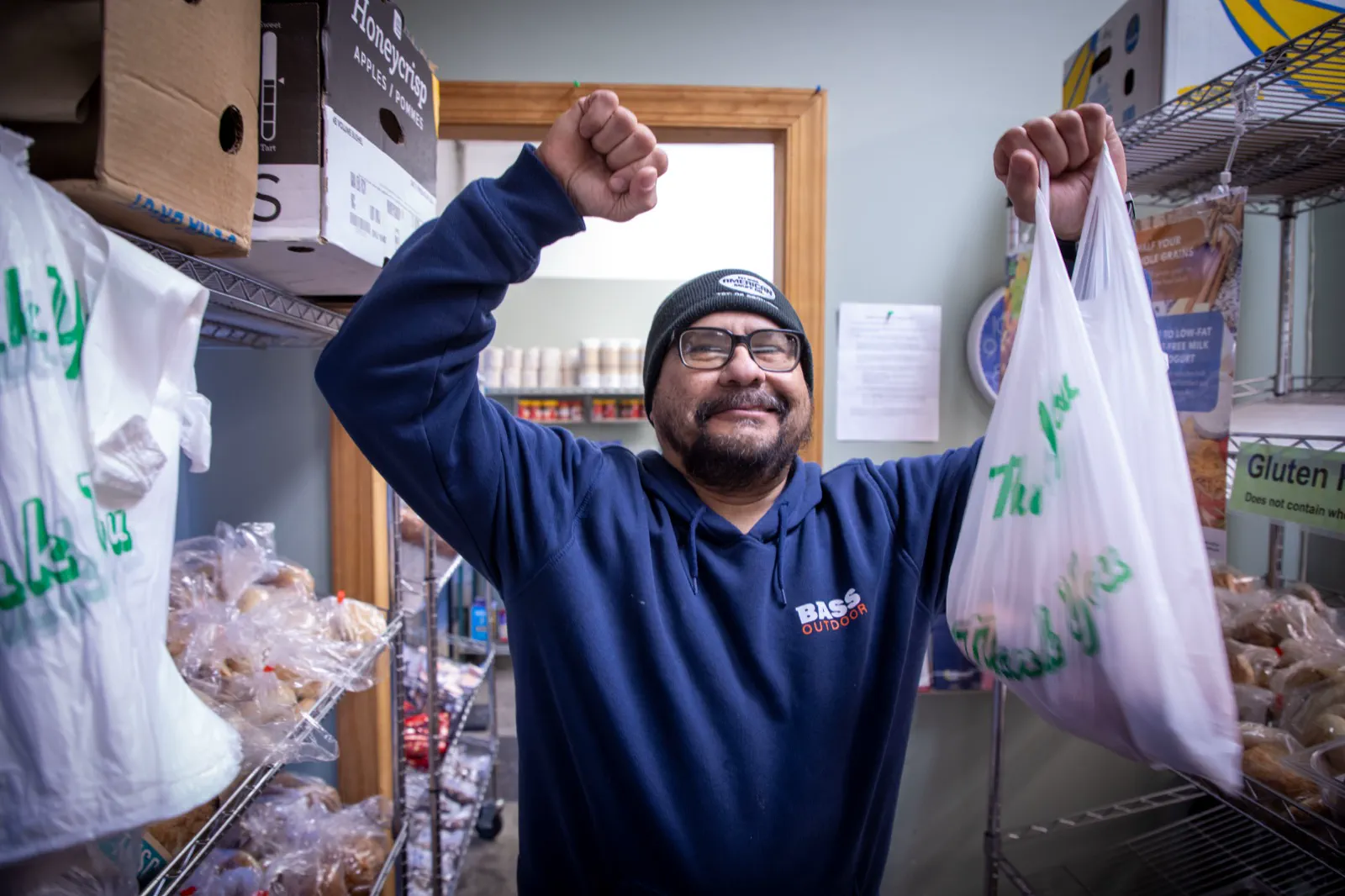
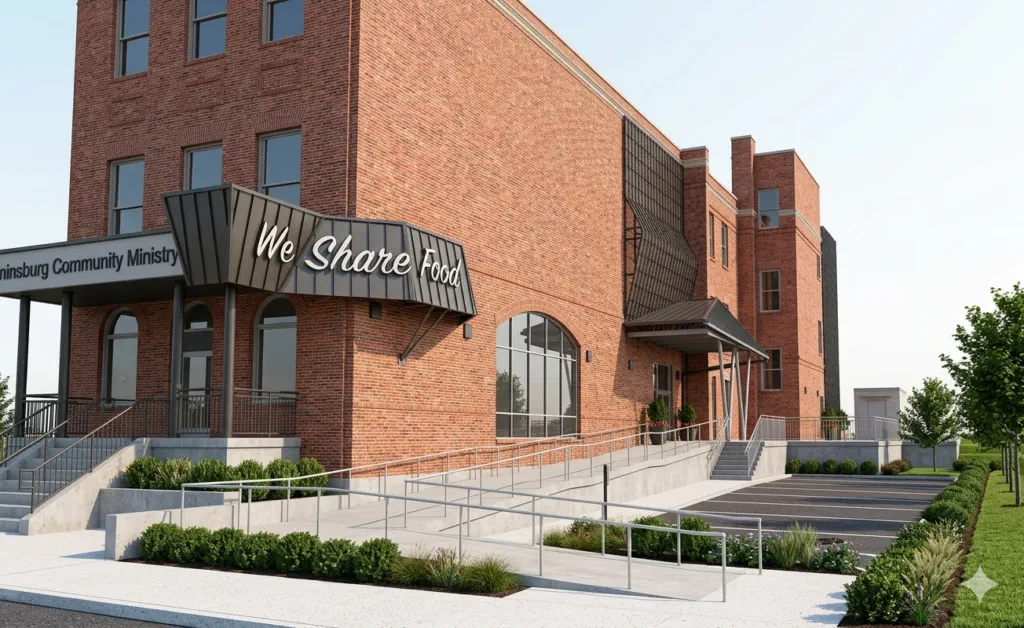
In 2025, at the double storefront on Wood Street in Wilkinsburg and our mobile pantry, WCM served over 55,000 families: this broke down to 100 daily Monday through Friday, distributing (usually) about 800 pounds of fresh food per day, plus canned food, frozen meat, staples, and household items. We have an exterior refrigerator and freezer. The food pantry is conveniently located near four subsidized housing facilities. It is also on the 61A and 71C bus routes, and one block from the busway, within about four-level blocks of both the MLK and Hamnet stations. The storefront is open 4 hours Monday through Friday. In the first quarter of 2024, we switched to evening hours on Tuesdays to accommodate our clients’ work schedules. The Mobile Pantry continues to serve 50-150 families a week at several sites, including Douglas Plaza, Reformed Presbyterian Church at Swissvale Ave and Park Place, St. James AME church in E Liberty, First Presbyterian Church of Edgewood, and Second Harvest in Sharpsburg. Several other sites have effectively started their own pantries, based on demonstrated need and success of the mobile pantry.
You are familiar with our history: In 1966-7 several congregations founded Wilkinsburg Community Ministry, concerned that President Johnson’s Great Society would not reach Wilkinsburg. Since then, WCM has offered a variety of services to improve the lives and living conditions of Wilkinsburg neighbors: tutoring, ESL lessons, summer programs for kids, after-school programs, and reading and learning programs for children and adults. During school strikes of the 1980s, we offered supervised tutoring for children during the day so parents could continue to work. We offered what later became WIC programs, a furniture warehouse, a clothing bank, a professional clothing bank, tax filing services, and Meals on Wheels. Wilkinsburg adults frequently recount the impact we have had on their lives: the first time they left the Wilkinsburg environs, for example, WCM took them to Frick Park, the Carnegie Museums, or on a ski trip. Many of the social programs now available in Wilkinsburg were nurtured at WCM.
In 2016- 2017, a Forbes Fund board efficiency grant encouraged us to examine our mission. WCM was struggling to be all things to all residents and, subsequently, not doing anything particularly well. We established a committee whose sole job is to explore projects to determine whether they fit into the mission and capacity of the organization. What did we do best? How good is an “emergency food program” that is not open and accessible? Food emergencies do not happen at the convenience of a congregational schedule. WCM also recognized that the congregations alone could not fill this need; this was brought home to us, and reinforced, during the pandemic when many churches had to close their facilities. WCM was open through the entire pandemic, and we had lines around the block.
By mid-2017, the Capacity and Clarity Committee (CCC) identified WCM priorities. The resulting report suggested not only that we focus solely on food insecurity, but that we implement the following: expanded storage space, mobile pantry, pantry garden, and a broadly based philosophy to share food, not prepackage boxes for distribution. This is widely considered the “best-practice” in food bank management.
Consequently, we focused on what we could do to alleviate that challenge. The availability of government support varies, based (in part) on household income as it relates to the poverty level. Income eligibility thresholds for the Supplemental Nutrition Assistance Program (SNAP), the nation’s largest food assistance program and an important line of defense against hunger, range from 130% to 200% of the federal poverty line ($40,560 to $62,400 for a family of four as of January 2024). National data from the USDA indicates that approximately 50% of people facing hunger have incomes above the federal gross income limit for SNAP (130% of the federal poverty line) and thus may be ineligible for the program. Local estimates from Map the Meal Gap suggest rates are even higher in some communities, especially, ironically, in rural communities. The need is not going away.
In 2025, food banks around the country faced a massive crisis as the cost of food increased monthly, the subsidies from government programs decreased or disappeared, and other support for families at the lowest economic margin suffered draconian cuts.